Emotional TraumaTrauma EmocionalЭмоциональная травма
How traumatic experiences leave low-frequency imprints in your energy body — and why they keep recreating the same situations in your life until they are healed.Cómo las experiencias traumáticas dejan huellas de baja frecuencia en tu cuerpo energético — y por qué siguen recreando las mismas situaciones en tu vida hasta que son sanadas.Как травматические переживания оставляют низкочастотные отпечатки в вашем энергетическом теле — и почему они продолжают воссоздавать одни и те же ситуации в вашей жизни, пока не будут исцелены.
What Happens When We Experience TraumaQué Ocurre Cuando Experimentamos un TraumaЧто происходит, когда мы переживаем травму
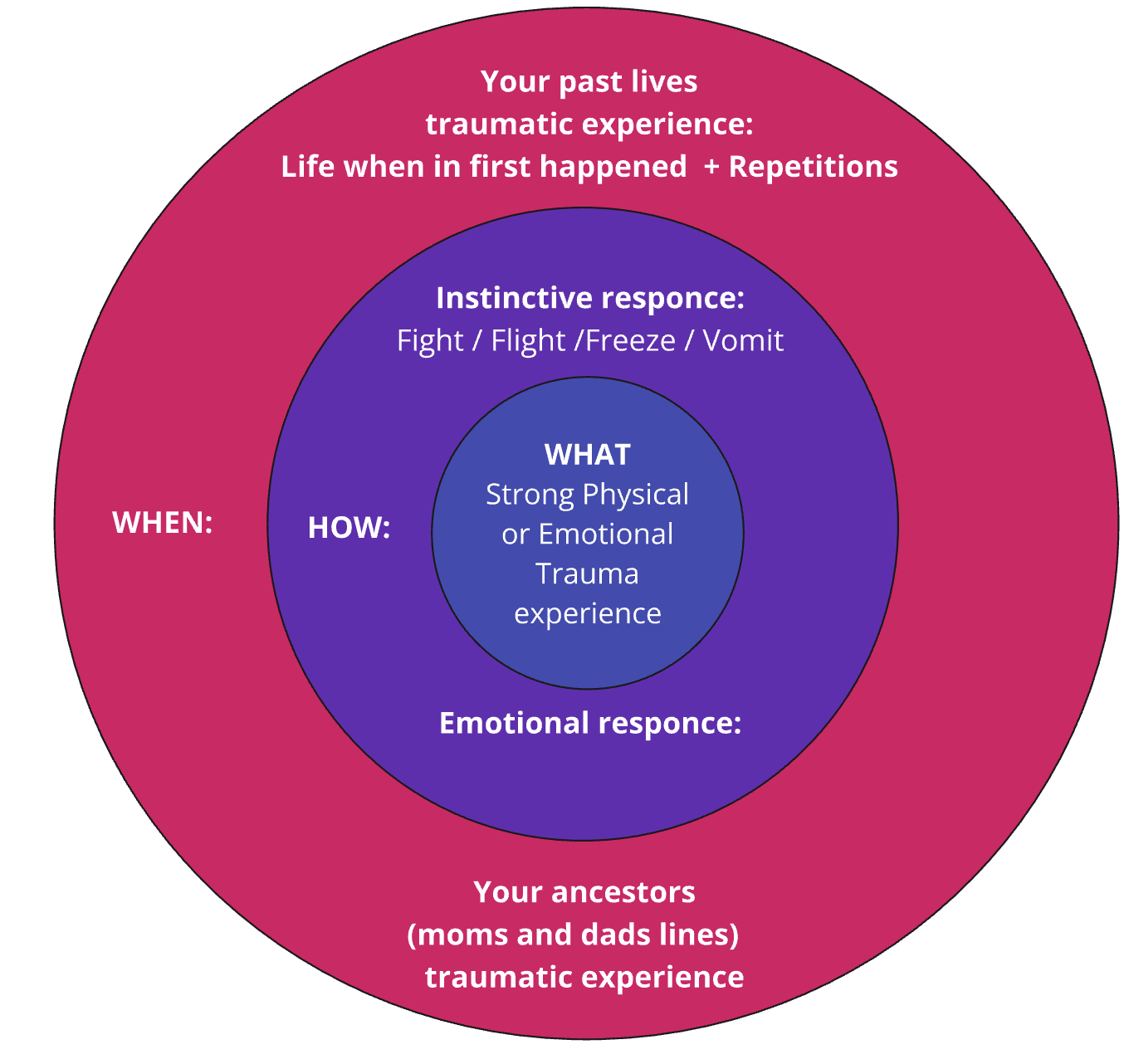
When we experience an event of trauma or violence, we can usually see the result on the physical body — an injury or a bruise. But the event also generates a powerful low-frequency emotional and instinctive response: we feel emotional pain, often even stronger than the physical pain.Cuando experimentamos un evento de trauma o violencia, generalmente podemos ver el resultado en el cuerpo físico — una lesión o un hematoma. Pero el evento también genera una poderosa respuesta emocional e instintiva de baja frecuencia: sentimos dolor emocional, a menudo incluso más fuerte que el dolor físico.Когда мы переживаем событие, связанное с травмой или насилием, мы обычно видим результат на физическом теле — травму или синяк. Но событие также порождает мощный низкочастотный эмоциональный и инстинктивный отклик: мы ощущаем эмоциональную боль, зачастую даже более сильную, чем физическая.
These low-frequency emotions and instincts don't simply pass. They get stuck in the body — as an "energy bruise" of a low frequency, lodged inside your naturally high-vibrational energy field.Estas emociones e instintos de baja frecuencia no simplemente pasan. Se quedan atascados en el cuerpo — como un "hematoma energético" de baja frecuencia, alojado dentro de tu campo energético naturalmente de alta vibración.Эти низкочастотные эмоции и инстинкты не просто проходят. Они застревают в теле — как «энергетический синяк» низкой частоты, застрявший внутри вашего naturally высоковибрационного энергетического поля.
Just as a physical bruise is a pocket of damaged tissue, an energy bruise is a pocket of frozen low-frequency energy — still holding the full emotional charge of the original moment.Así como un hematoma físico es una bolsa de tejido dañado, un hematoma energético es una bolsa de energía de baja frecuencia congelada — que aún contiene la carga emocional completa del momento original.Подобно тому, как физический синяк — это очаг повреждённой ткани, энергетический синяк — это очаг замороженной низкочастотной энергии, всё ещё удерживающий полный эмоциональный заряд исходного момента.
Research basis: van der Kolk — The Body Keeps the Score; Levine — Waking the Tiger; Pert — Molecules of Emotion →Base de investigación: van der Kolk — El Cuerpo Lleva la Cuenta; Levine — Despertar al Tigre; Pert — Moléculas de Emoción →Научная база: ван дер Колк — Тело помнит всё; Левин — Пробуждение тигра; Перт — Молекулы эмоций →
Emotions Linked to TraumaEmociones Vinculadas al TraumaЭмоции, связанные с травмой
Any of these can become frozen in the energy body at the moment of the original event:Cualquiera de estas puede quedar congelada en el cuerpo energético en el momento del evento original:Любая из них может застыть в энергетическом теле в момент исходного события:
Fear · Shame · Rage · Grief · Helplessness · Worthlessness · Guilt · Despair · Loneliness · Resentment · Betrayal · TerrorMiedo · Vergüenza · Rabia · Duelo · Impotencia · Inutilidad · Culpa · Desesperación · Soledad · Resentimiento · Traición · TerrorСтрах · Стыд · Ярость · Горе · Беспомощность · Ничтожность · Вина · Отчаяние · Одиночество · Обида · Предательство · Ужас
Full emotions reference →Referencia completa de emociones →Полный справочник эмоций →
Survival Instincts Linked to TraumaInstintos de Supervivencia Vinculados al TraumaИнстинкты выживания, связанные с травмой
These instinctive responses can get frozen and will activate automatically whenever a similar situation is detected:Estas respuestas instintivas pueden quedar congeladas y se activarán automáticamente cada vez que se detecte una situación similar:Эти инстинктивные реакции могут застыть и будут автоматически активироваться каждый раз, когда обнаруживается похожая ситуация:
How Energy Bruises Affect Your LifeCómo los Hematomas Energéticos Afectan tu VidaКак энергетические синяки влияют на вашу жизнь
Repeating SituationsSituaciones RepetidasПовторяющиеся ситуации
These energy bruises repeatedly re-create situations in your life where you feel the same emotions and instincts you felt at the moment of the original trauma. Different events, different people — same emotional charge, same inner experience.Estos hematomas energéticos recrean repetidamente situaciones en tu vida donde sientes las mismas emociones e instintos que sentiste en el momento del trauma original. Diferentes eventos, diferentes personas — la misma carga emocional, la misma experiencia interior.Эти энергетические синяки снова и снова воссоздают в вашей жизни ситуации, где вы ощущаете те же эмоции и инстинкты, что и в момент исходной травмы. Разные события, разные люди — тот же эмоциональный заряд, тот же внутренний опыт.
Physical IllnessEnfermedad FísicaФизическая болезнь
If left unhealed, the low-frequency energy bruise will eventually manifest as physical trauma, illness, or chronic pain — in the exact part of the body where it is stored from the moment of the original event.Si no se sana, el hematoma energético de baja frecuencia eventualmente se manifestará como trauma físico, enfermedad o dolor crónico — en la parte exacta del cuerpo donde está almacenado desde el momento del evento original.Если оставить незаживающим, низкочастотный энергетический синяк в конечном счёте проявится как физическая травма, болезнь или хроническая боль — именно в той части тела, где он хранится с момента исходного события.
Types of Trauma Origins — and How They Are ConnectedTipos de Orígenes del Trauma — y Cómo Están ConectadosВиды происхождения травмы — и как они связаны между собой
Trauma doesn't only come from this lifetime. It can have roots across multiple dimensions of time — and these roots are not separate. They are deeply interconnected.El trauma no proviene solo de esta vida. Puede tener raíces en múltiples dimensiones del tiempo — y estas raíces no están separadas. Están profundamente interconectadas.Травма происходит не только из этой жизни. Она может иметь корни в нескольких измерениях времени — и эти корни не разделены. Они глубоко взаимосвязаны.
Personal Past Life TraumaTrauma Personal de Vidas PasadasЛичная травма прошлых жизней
Low-frequency emotions from previous incarnations still stored in your energy body — forming the core frequency pattern.Emociones de baja frecuencia de encarnaciones anteriores aún almacenadas en tu cuerpo energético — formando el patrón de frecuencia central.Низкочастотные эмоции из прошлых воплощений, всё ещё хранящиеся в вашем энергетическом теле — формирующие основной частотный паттерн.
Ancestral TraumaTrauma AncestralРодовая травма
Your family lineage holds the energetic memory of traumas experienced by ancestors — passed down through the family field, matching your own pattern.Tu linaje familiar conserva la memoria energética de los traumas experimentados por los ancestros — transmitida a través del campo familiar, coincidiendo con tu propio patrón.Ваш родовой линейный путь хранит энергетическую память о травмах, пережитых предками — передаваемую через семейное поле и совпадающую с вашим собственным паттерном.
This Life's MemoriesRecuerdos de Esta VidaВоспоминания этой жизни
Experiences in this lifetime where the same traumatic emotions were re-lived — reinforcing the pattern and forming beliefs around it.Experiencias en esta vida donde las mismas emociones traumáticas fueron revividas — reforzando el patrón y formando creencias a su alrededor.Переживания в этой жизни, где те же травматические эмоции были прожиты заново — укрепляя паттерн и формируя убеждения вокруг него.
How They Are ConnectedCómo Están ConectadosКак они связаны
You carry traumatic low-frequency emotions stored in your energy body from previous lives. These form a frequency pattern. This pattern will tend to match your family's ancestral pattern of similar traumatic emotions — you didn't choose this family randomly.Llevas emociones traumáticas de baja frecuencia almacenadas en tu cuerpo energético de vidas anteriores. Estas forman un patrón de frecuencia. Este patrón tenderá a coincidir con el patrón ancestral de tu familia de emociones traumáticas similares — no elegiste esta familia al azar.Вы несёте в своём энергетическом теле низкочастотные травматические эмоции из прошлых жизней. Они формируют частотный паттерн. Этот паттерн стремится совпасть с родовым паттерном вашей семьи из схожих травматических эмоций — вы выбрали эту семью не случайно.
Because you carry all of this in your energy body from childhood, you will naturally generate life situations that reproduce these same emotions — attracting experiences that match the frequency you hold.Debido a que llevas todo esto en tu cuerpo energético desde la infancia, naturalmente generarás situaciones de vida que reproducen estas mismas emociones — atrayendo experiencias que coinciden con la frecuencia que tienes.Поскольку вы несёте всё это в своём энергетическом теле с детства, вы естественным образом будете порождать жизненные ситуации, воспроизводящие эти же эмоции — притягивая переживания, соответствующие вашей частоте.
This is why people ask: "Why did this happen to an innocent child?" It is not punishment. It is simply the physics of low-frequency energy creating matching life experiences. It is not your fault, and it is not anyone's fault. It is a pattern — one that can be healed and broken.Por eso la gente pregunta: "¿Por qué le pasó esto a un niño inocente?" No es un castigo. Es simplemente la física de la energía de baja frecuencia creando experiencias de vida coincidentes. No es tu culpa, ni es culpa de nadie. Es un patrón — uno que puede sanarse y romperse.Вот почему люди спрашивают: «Почему это произошло с невинным ребёнком?» Это не наказание. Это просто физика низкочастотной энергии, создающей соответствующие жизненные переживания. Это не ваша вина, и это не чья-то вина. Это паттерн — тот, который можно исцелить и разорвать.
To fully break the cycle you need to heal on all three levels: your personal past-life traumas, your ancestral line's traumas, and the beliefs and patterns formed from the same trauma being re-lived in this life.Para romper completamente el ciclo, necesitas sanar en los tres niveles: tus traumas personales de vidas pasadas, los traumas de tu línea ancestral y las creencias y patrones formados a partir del mismo trauma siendo revivido en esta vida.Чтобы полностью разорвать цикл, вам нужно исцелиться на всех трёх уровнях: личные травмы прошлых жизней, травмы вашей родовой линии и убеждения и паттерны, сформированные из той же травмы, прожитой заново в этой жизни.
Understanding the Roots of Energy Body TraumasComprendiendo las Raíces de los Traumas del Cuerpo EnergéticoПонимание корней травм энергетического тела
To heal the energy bruises in your body, you need to tap into the information about the initial traumatic event that created them. The root of the trauma usually lies in two major areas:Para sanar los hematomas energéticos en tu cuerpo, necesitas acceder a la información sobre el evento traumático inicial que los creó. La raíz del trauma generalmente se encuentra en dos áreas principales:Чтобы исцелить энергетические синяки в вашем теле, вам нужно получить доступ к информации об исходном травматическом событии, которое их создало. Корень травмы обычно лежит в двух основных областях:
We usually have various incarnations where we re-live the same trauma pattern. We need to find the original incarnation — the one where the trauma was experienced for the very first time.Generalmente tenemos varias encarnaciones donde revivimos el mismo patrón de trauma. Necesitamos encontrar la encarnación original — aquella donde el trauma fue experimentado por primera vez.Обычно у нас есть различные воплощения, где мы заново проживаем тот же паттерн травмы. Нам нужно найти исходное воплощение — то, где травма была пережита впервые.
For a deep exploration of how souls carry experiences across lifetimes, see Michael Newton's work — particularly Journey of Souls and Destiny of Souls — which documents thousands of between-life regression sessions and the patterns souls repeat across incarnations.Para una exploración profunda de cómo las almas llevan experiencias a través de las vidas, consulta el trabajo de Michael Newton — particularmente Viaje de Almas y Destino de Almas — que documenta miles de sesiones de regresión entre vidas y los patrones que las almas repiten a lo largo de las encarnaciones.Для глубокого изучения того, как души несут переживания сквозь жизни, обратитесь к работам Майкла Ньютона — особенно к «Путешествию души» и «Предназначению души» — которые документируют тысячи сеансов регрессии между жизнями и паттерны, повторяемые душами в воплощениях.
Field evidence: Ian Stevenson & Jim Tucker — 3,000+ verified past-life cases; Brian Weiss — Many Lives, Many Masters →Evidencia de campo: Ian Stevenson y Jim Tucker — más de 3.000 casos verificados de vidas pasadas; Brian Weiss — Muchas Vidas, Muchos Maestros →Полевые доказательства: Ян Стивенсон и Джим Такер — более 3000 верифицированных случаев прошлых жизней; Брайан Вайс — Много жизней, много учителей →
Each family lineage stores in their energy bodies the information about traumas their ancestors experienced. This creates a specific energy frequency pattern in the family field — re-creating situations in the lives of family members where they feel the same emotions and instincts their ancestor felt at the original moment. To reincarnate in a certain family line, your past-life trauma frequency pattern and your ancestors' trauma frequency pattern must match.Cada linaje familiar almacena en sus cuerpos energéticos la información sobre los traumas que experimentaron sus ancestros. Esto crea un patrón de frecuencia energética específico en el campo familiar — recreando situaciones en las vidas de los miembros de la familia donde sienten las mismas emociones e instintos que su ancestro sintió en el momento original. Para reencarnarse en un determinado linaje familiar, tu patrón de frecuencia de trauma de vidas pasadas y el patrón de frecuencia de trauma de tus ancestros deben coincidir.Каждый родовой линейный путь хранит в своих энергетических телах информацию о травмах, пережитых предками. Это создаёт специфический энергетический частотный паттерн в семейном поле — воссоздавая ситуации в жизни членов семьи, где они ощущают те же эмоции и инстинкты, что и их предок в исходный момент. Чтобы воплотиться в определённой семейной линии, ваш частотный паттерн травмы прошлой жизни и частотный паттерн травмы ваших предков должны совпадать.
This is now supported by mainstream science through the field of epigenetics — the study of how trauma and experience alter gene expression and are passed down through generations. Bruce Lipton's work (The Biology of Belief) and research on intergenerational trauma transmission show that our cells literally carry the emotional imprints of our ancestors.Esto está respaldado ahora por la ciencia convencional a través del campo de la epigenética — el estudio de cómo el trauma y la experiencia alteran la expresión génica y se transmiten a través de las generaciones. El trabajo de Bruce Lipton (La Biología de la Creencia) y la investigación sobre la transmisión intergeneracional del trauma muestran que nuestras células literalmente llevan las huellas emocionales de nuestros ancestros.Это теперь подкреплено академической наукой через область эпигенетики — изучение того, как травма и опыт изменяют экспрессию генов и передаются из поколения в поколение. Работы Брюса Липтона («Биология убеждений») и исследования межпоколенческой передачи травмы показывают, что наши клетки буквально несут эмоциональные отпечатки наших предков.
Peer-reviewed evidence: Rachel Yehuda — Holocaust epigenetics research; Mark Wolynn — It Didn't Start with You →Evidencia revisada por pares: Rachel Yehuda — investigación epigenética del Holocausto; Mark Wolynn — No Empezó Contigo →Рецензируемые доказательства: Рэйчел Иегуда — эпигенетическое исследование Холокоста; Марк Уолинн — Это началось не с тебя →
Above our third dimension there is no linear time — everything exists in the same moment. So once we make a shift in the "past," this creates a butterfly effect on the present: the energy bruise is released and you stop recreating the trauma in your life.Por encima de nuestra tercera dimensión no hay tiempo lineal — todo existe en el mismo momento. Entonces, una vez que hacemos un cambio en el "pasado," esto crea un efecto mariposa en el presente: el hematoma energético se libera y dejas de recrear el trauma en tu vida.Выше нашего третьего измерения нет линейного времени — всё существует в одном моменте. Поэтому как только мы делаем сдвиг в «прошлом», это создаёт эффект бабочки в настоящем: энергетический синяк освобождается, и вы перестаёте воссоздавать травму в своей жизни.
To fully heal, we need to connect with and heal the event at all three points:Para sanar completamente, necesitamos conectar con y sanar el evento en los tres puntos:Чтобы полностью исцелиться, нам нужно соединиться с событием и исцелить его во всех трёх точках:
- ◆The past life event where the trauma originated for the first timeEl evento de la vida pasada donde el trauma se originó por primera vezСобытие прошлой жизни, где травма возникла впервые
- ◆The ancestor who experienced the trauma first in the family lineEl ancestro que experimentó el trauma primero en el linaje familiarПредок, который первым пережил травму в родовой линии
- ◆Moments in your childhood and current life where you re-lived the same traumatic emotionsMomentos en tu infancia y vida actual donde reviviste las mismas emociones traumáticasМоменты в вашем детстве и текущей жизни, где вы заново проживали те же травматические эмоции
Understanding the Layers of TraumaComprendiendo las Capas del TraumaПонимание слоёв травмы
Once you catch a glimpse of your trauma being activated, the next step is to dig into its roots. We usually latch onto the strongest surface emotion and get overwhelmed by it — but there are always deeper underlying layers that lead to the actual root: why the trauma happened in the first place. Once you understand what could have been done differently to avoid it, you can change the scenario and heal it.Una vez que vislumbras tu trauma siendo activado, el siguiente paso es profundizar en sus raíces. Generalmente nos aferramos a la emoción superficial más fuerte y nos abrumamos con ella — pero siempre hay capas subyacentes más profundas que llevan a la raíz real: por qué ocurrió el trauma en primer lugar. Una vez que comprendes qué se podría haber hecho de manera diferente para evitarlo, puedes cambiar el escenario y sanarlo.Как только вы замечаете активацию своей травмы, следующий шаг — углубиться в её корни. Обычно мы цепляемся за самую сильную поверхностную эмоцию и захлёбываемся в ней — но всегда есть более глубокие слои, ведущие к настоящему корню: почему травма произошла изначально. Как только вы понимаете, что можно было сделать иначе, чтобы её избежать, вы можете изменить сценарий и исцелить её.
Our Goal in HealingNuestro Objetivo en la SanaciónНаша цель в исцелении
- ◆Understand and release all underlying emotional layers and survival instincts (fight, run, freeze, vomit)Comprender y liberar todas las capas emocionales subyacentes y los instintos de supervivencia (luchar, huir, paralizarse, vomitar)Понять и освободить все глубинные эмоциональные слои и инстинкты выживания (бороться, бежать, замереть, рвота)
- ◆Understand the "side benefits" — what you unconsciously gain from holding onto this trauma patternComprender los "beneficios secundarios" — lo que ganas inconscientemente al aferrarte a este patrón de traumaПонять «побочные выгоды» — то, что вы бессознательно получаете, удерживая этот паттерн травмы
- ◆Understand what you or your ancestor could have done differently to avoid the trauma altogetherComprender qué tú o tu ancestro podrían haber hecho de manera diferente para evitar el trauma por completoПонять, что вы или ваш предок могли сделать иначе, чтобы полностью избежать травмы
- ◆Change the scenario — make a different choice at the root, so that the trauma never happenedCambiar el escenario — tomar una decisión diferente en la raíz, de modo que el trauma nunca haya ocurridoИзменить сценарий — сделать другой выбор в корне, чтобы травма никогда не произошла
Exercises for Finding the LayersEjercicios para Encontrar las CapasУпражнения для поиска слоёв
Tune into the strongest emotion you are feeling during a trauma activation. Feel it — sit inside it for a moment without acting on it. Then work through the four exercises below. Write your answers down.Sintoniza con la emoción más fuerte que sientes durante una activación de trauma. Siéntela — siéntate dentro de ella por un momento sin actuar sobre ella. Luego trabaja los cuatro ejercicios a continuación. Escribe tus respuestas.Настройтесь на самую сильную эмоцию, которую вы ощущаете во время активации травмы. Прочувствуйте её — побудьте внутри неё минуту, не действуя. Затем проработайте четыре упражнения ниже. Запишите свои ответы.
Exercise: Pattern RecognitionEjercicio: Reconocimiento de PatronesУпражнение: Распознавание паттернов
Remember all the situations in your life when you felt this same emotion or had the same type of reaction. Feel each situation as if you are back in it — connect with the emotions it brings up.Recuerda todas las situaciones en tu vida en las que sentiste esta misma emoción o tuviste el mismo tipo de reacción. Siente cada situación como si estuvieras de vuelta en ella — conéctate con las emociones que surgen.Вспомните все ситуации в вашей жизни, когда вы ощущали эту же эмоцию или имели такую же реакцию. Прочувствуйте каждую ситуацию, как будто вы снова в ней — соединитесь с эмоциями, которые она вызывает.
- ◆What emotions came up each time? List every one.¿Qué emociones surgieron cada vez? Enuméralas todas.Какие эмоции возникали каждый раз? Перечислите все.
- ◆What survival instincts activated — fight, run, freeze, numb, vomit?¿Qué instintos de supervivencia se activaron — luchar, huir, paralizarse, entumecerse, vomitar?Какие инстинкты выживания активировались — бороться, бежать, замереть, онеметь, рвота?
- ◆What happened right before the emotion got triggered each time?¿Qué pasó justo antes de que la emoción se desencadenara cada vez?Что происходило непосредственно перед тем, как каждый раз срабатывал триггер эмоции?
- ◆What did you do with the emotion — express it, suppress it, act on it?¿Qué hiciste con la emoción — la expresaste, la suprimiste, actuaste sobre ella?Что вы делали с эмоцией — выражали её, подавляли, действовали под её влиянием?
Notice the common thread across all these situations. That thread is the pattern.Observa el hilo común en todas estas situaciones. Ese hilo es el patrón.Заметьте общую нить во всех этих ситуациях. Эта нить и есть паттерн.
Exercise: What IfEjercicio: ¿Y Si?Упражнение: А что если?
Take the strongest emotion you've identified and ask yourself: "What is the worst thing that can happen because of this situation?" Follow the chain all the way to its end — don't stop at the first answer.Toma la emoción más fuerte que has identificado y pregúntate: "¿Cuál es la peor cosa que puede pasar por esta situación?" Sigue la cadena hasta su final — no te detengas en la primera respuesta.Возьмите самую сильную выявленную эмоцию и спросите себя: «Что самое худшее может случиться из-за этой ситуации?» Следуйте по цепочке до самого конца — не останавливайтесь на первом ответе.
Example: "I hate my boss → I can't leave this job → If I lose the income, I can't pay rent → I'll have nowhere to live → I'll die."Ejemplo: "Odio a mi jefe → No puedo dejar este trabajo → Si pierdo los ingresos, no puedo pagar el alquiler → No tendré dónde vivir → Moriré."Пример: «Я ненавижу своего начальника → Я не могу уйти с этой работы → Если я потеряю доход, я не смогу платить за аренду → Мне негде будет жить → Я умру.»
The end of the chain is always the root fear. It is almost always a survival fear — fear of death, abandonment, or complete loss of safety. Don't try to resolve it yet. Just get to it, name it, and write it down.El final de la cadena es siempre el miedo raíz. Casi siempre es un miedo de supervivencia — miedo a la muerte, al abandono o a la pérdida total de seguridad. No intentes resolverlo todavía. Solo llega a él, nómbralo y escríbelo.Конец цепочки — всегда корневой страх. Почти всегда это страх выживания — страх смерти, брошенности или полной потери безопасности. Не пытайтесь пока его разрешить. Просто доберитесь до него, назовите его и запишите.
Exercise: Find It in Your BodyEjercicio: Encuéntralo en tu CuerpoУпражнение: Найдите это в своём теле
Close your eyes and feel where this emotion lives in your body. Scan slowly — chest, belly, throat, jaw, shoulders, lower back. Where do you feel the most tension, heaviness, or contraction?Cierra los ojos y siente dónde vive esta emoción en tu cuerpo. Escanea lentamente — pecho, vientre, garganta, mandíbula, hombros, parte baja de la espalda. ¿Dónde sientes más tensión, pesadez o contracción?Закройте глаза и почувствуйте, где в вашем теле живёт эта эмоция. Медленно сканируйте — грудь, живот, горло, челюсть, плечи, поясницу. Где вы ощущаете наибольшее напряжение, тяжесть или сжатие?
- ◆Where exactly is it? (Be as specific as possible — left side of chest, upper belly, etc.)¿Dónde exactamente está? (Sé lo más específico posible — lado izquierdo del pecho, vientre superior, etc.)Где именно это находится? (Будьте как можно конкретнее — левая сторона груди, верхняя часть живота и т.д.)
- ◆What does it feel like? Heavy, sharp, tight, cold, burning, numb?¿Cómo se siente? ¿Pesado, agudo, tenso, frío, ardiente, entumecido?Как это ощущается? Тяжело, остро, сжато, холодно, жжёт, онемело?
- ◆How large is it? Does it have a shape or a colour?¿Qué tamaño tiene? ¿Tiene forma o color?Насколько оно велико? Есть ли у него форма или цвет?
The body always holds the map. Once you can locate it physically, you can work with it energetically. This is the specific area where the energy bruise is stored.El cuerpo siempre tiene el mapa. Una vez que puedas localizarlo físicamente, puedes trabajar con él energéticamente. Esta es el área específica donde se almacena el hematoma energético.Тело всегда хранит карту. Как только вы можете локализовать его физически, вы можете работать с ним энергетически. Это и есть конкретная область, где хранится энергетический синяк.
Exercise: Side BenefitsEjercicio: Beneficios SecundariosУпражнение: Побочные выгоды
For each emotion on your list, ask yourself: "What do I get from feeling this? What could happen if I let it go?"Para cada emoción en tu lista, pregúntate: "¿Qué obtengo al sentir esto? ¿Qué podría pasar si lo dejo ir?"Для каждой эмоции в вашем списке спросите себя: «Что я получаю от этого ощущения? Что может произойти, если я отпущу это?»
The answer reveals the hidden reason your system holds onto the trauma — the unconscious payoff that makes keeping it feel safer than releasing it.La respuesta revela la razón oculta por la que tu sistema se aferra al trauma — el beneficio inconsciente que hace que mantenerlo se sienta más seguro que liberarlo.Ответ раскрывает скрытую причину, по которой ваша система удерживает травму — бессознательную выгоду, из-за которой хранить её кажется безопаснее, чем отпустить.
- ◆"If I'm angry, I'm strong and powerful. If I'm not angry, I'm weak and can't protect my boundaries.""Si estoy enojado, soy fuerte y poderoso. Si no estoy enojado, soy débil y no puedo proteger mis límites."«Когда я злюсь, я силён и могуществен. Если я не злюсь, я слаб и не могу защитить свои границы.»
- ◆"If I'm a victim, everyone takes care of me and I get what I want.""Si soy una víctima, todos me cuidan y obtengo lo que quiero."«Если я жертва, все обо мне заботятся, и я получаю то, что хочу.»
Write down the side benefit for each emotion. Understanding it is part of releasing it — you cannot release what you still unconsciously need.Escribe el beneficio secundario para cada emoción. Comprenderlo es parte de liberarlo — no puedes liberar lo que todavía necesitas inconscientemente.Запишите побочную выгоду для каждой эмоции. Понять её — значит частично освободиться от неё: вы не можете отпустить то, что вам всё ещё бессознательно нужно.
Find Where the Trauma StartedEncuentra Dónde Comenzó el TraumaНайдите, где началась травма
Once you have your list of emotions and instincts, the next step is to go to the origin — past lives and the ancestral line. This is where the pattern was first created.Una vez que tienes tu lista de emociones e instintos, el siguiente paso es ir al origen — vidas pasadas y la línea ancestral. Aquí es donde se creó el patrón por primera vez.Как только у вас есть список эмоций и инстинктов, следующий шаг — перейти к истоку: прошлым жизням и родовой линии. Именно здесь паттерн был создан впервые.